
Understanding Narcissim: How It Develops and Why It Affects Relationships
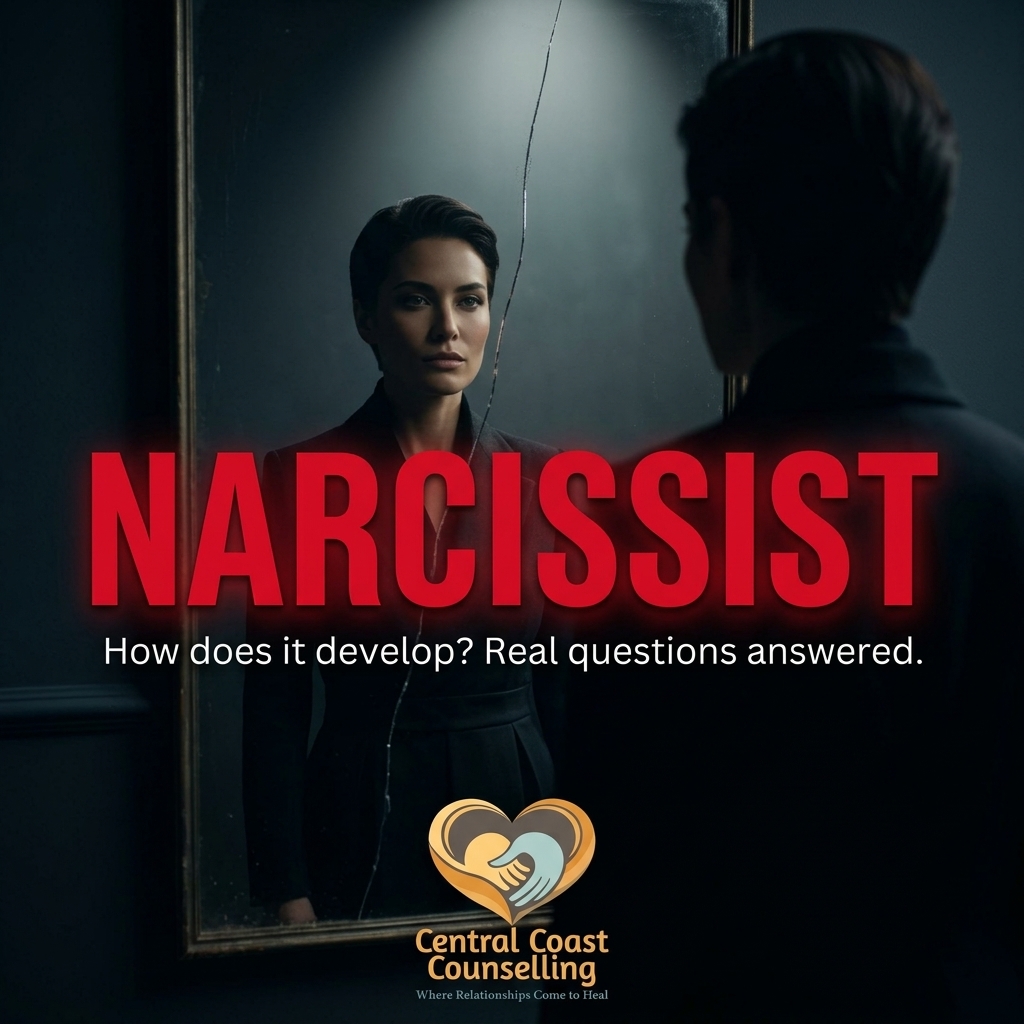
Narcissism is one of the most misunderstood words in relationships today. This blog post answers real questions about how narcissism develops, and it answers many other questions about narcissism along the way: what it looks like in a relationship, why accountability can feel so threatening, whether change is possible, and when safety must come before relationship repair.
What Is Narcissism?
The word narcissism is often used to describe people who seem selfish, controlling, manipulative or lacking in empathy. The reality is more complex than simply being self-centred.
Narcissistic traits exist on a spectrum. At its core, problematic narcissism often involves difficulty with self-worth, emotional regulation, empathy and holding a stable sense of identity.
So how does narcissism develop? Let's explore this gently and honestly.
1. Childhood Experiences and Emotional Development
Our earliest relationships shape how we see ourselves and other people. Children build emotional security through consistent love, validation, healthy boundaries and a safe connection with their caregivers.
When these needs are not adequately met, some children learn unhealthy ways of protecting their self-esteem. Experiences that may contribute to narcissistic traits include:
- Emotional neglect or inconsistent affection
- Frequent criticism, humiliation or rejection
- Being valued mainly for achievements, appearance or success
- Excessive praise without boundaries or accountability
- Conditional love, where affection depends on meeting expectations
- Growing up in an environment where vulnerability is discouraged
It is important to say that none of these experiences automatically create narcissism. Many people go through difficult childhoods without developing narcissistic traits or Narcissistic Personality Disorder.
2. Narcissism as a Psychological Defence
For some people, narcissistic behaviour develops as a way of protecting a fragile sense of self-worth. Someone who feels deeply inadequate may come across as superior, powerful or always right. Because criticism can feel like a threat to their self-image, admitting mistakes becomes very hard.
This can show up as:
- Blaming others instead of accepting responsibility
- Becoming defensive when challenged
- Seeking constant admiration and validation
- Dismissing another person's feelings
- Reacting with anger to perceived criticism
- Finding it difficult to apologise sincerely
What looks like extreme confidence can sometimes conceal deep insecurity. That said, not every person with narcissistic traits experiences themselves as insecure, and these behaviours can have a number of different psychological explanations.
3. The Role of Parenting and Family Dynamics
Children learn about relationships by watching the adults around them. When a child grows up seeing manipulation, emotional withdrawal, entitlement or a lack of accountability, these patterns can come to feel normal.
Other children experience very high expectations or approval that has to be earned. They may learn that being vulnerable, imperfect or wrong is not acceptable. Over time, these lessons can influence how a person handles conflict, expresses emotion and relates to others.
Children thrive when they receive both unconditional love and appropriate accountability. Together, these help them develop healthy self-worth and empathy.
4. How Narcissistic Behaviours Affect Relationships
Healthy relationships rest on mutual respect, emotional safety, empathy, honesty and accountability. When strong narcissistic traits are present, these qualities can be hard to maintain. A partner may experience:
- Emotional invalidation: feelings are dismissed, minimised or criticised.
- Blame-shifting: responsibility is repeatedly turned back onto them.
- Lack of accountability: apologies are avoided, conditional, or followed by the same harmful behaviour.
- Manipulation: guilt, withdrawal or a distortion of events is used to influence the relationship.
- Control: one partner tries to dominate decisions, friendships or personal independence.
- Lack of empathy: emotional needs are overlooked or treated as an inconvenience.
Over time, these patterns can leave a partner feeling unheard, confused, emotionally exhausted and increasingly unsure of themselves.
It is worth remembering that these behaviours are not exclusive to narcissism, and a diagnosis is not needed for someone's behaviour to be harmful.
5. Why Is Taking Responsibility So Difficult?
For some people with pronounced narcissistic traits, acknowledging wrongdoing can feel threatening. Rather than seeing a mistake as something they did, they may experience criticism as an attack on who they are. They may then respond with denial, defensiveness, anger or blame.
This can create a painful cycle in which one partner keeps raising concerns while the other avoids responsibility. A relationship cannot grow in a healthy way when one person is continually expected to carry responsibility for both.
6. Can Someone With Narcissistic Traits Change?
Yes, change is possible. It depends on several things, including a person's willingness to recognise their behaviour, take responsibility and commit to meaningful psychological work. Therapy may help someone to:
- Build greater emotional awareness
- Recognise unhealthy relationship patterns
- Strengthen empathy and emotional regulation
- Respond to criticism in healthier ways
- Accept responsibility without excessive defensiveness
- Build relationships based on mutual respect
Real change takes more than promises, apologies or short-term improvements. It is shown through consistent behaviour over time.
It is also important to know that a partner cannot force someone else to develop empathy, accept accountability or seek help. That choice belongs to the individual.
7. Narcissism Is Not the Same as Abuse
It helps to separate narcissistic personality traits from domestic and family violence. Not everyone with narcissistic traits is abusive, and not everyone who uses manipulation, coercive control or violence has Narcissistic Personality Disorder.
Abuse is a pattern of harmful behaviour involving power and control, whatever the diagnosis. When intimidation, threats, physical violence or coercive control are present, your safety must come before relationship repair.
If you are in immediate danger, please call 000. For confidential support at any time, 1800RESPECT (1800 737 732) is available 24 hours a day.
8. Recognising the Impact on Yourself
If your feelings are regularly dismissed, your boundaries are ignored, or you are often blamed for someone else's behaviour, it is important to take notice of how this is affecting your wellbeing. You might gently ask yourself:
- Do I feel emotionally safe expressing my feelings?
- Can I disagree without fearing the consequences?
- Does my partner accept responsibility for their behaviour?
- Am I constantly questioning my own judgement?
- Have I lost confidence or independence in this relationship?
- Am I holding on to who my partner used to be, rather than recognising how I am being treated today?
You do not need to decide whether someone is a narcissist before acknowledging that a relationship is affecting you. Your experience matters in its own right.
Final Thoughts
Narcissism does not come from a single childhood experience, parenting style or traumatic event. It grows out of a complex mix of temperament, personality development, life experience and psychological factors.
Understanding how narcissistic traits develop can help explain certain behaviours, but understanding someone does not mean excusing the harm they cause. You can have compassion for a person's past without accepting harmful behaviour in your present.
Healthy relationships need more than love. They need respect, empathy, accountability, emotional safety, and a willingness from both people to recognise how their behaviour affects the other.
How Central Coast Counselling Can Help
At Central Coast Counselling, I support individuals and couples facing relationship difficulties, emotional disconnection, unhealthy communication patterns, manipulation and challenges with boundaries.
Counselling offers a calm, supportive space to understand your relationship dynamics, rebuild your confidence, set healthier boundaries and make informed decisions about your emotional wellbeing.
Where abuse or coercive control is present, your safety and access to appropriate support always come first.
If you would like to talk, I would be glad to hear from you.
Ready to talk it through?
If something in this article sounds familiar, you do not have to work it out alone.
Book a session